How jelly sweets are made starts with carefully selected ingredients, controlled heating and precise mixing. This guide explains the main stages involved in producing colourful jelly confectionery.
Jelly sweet production involves several carefully managed stages. First, the ingredients are prepared. Next, they are mixed, heated and flavoured. Finally, the sweets are shaped, cooled and packaged.
The process begins with selecting the ingredients required for each recipe. These may include fruit juices, halal gelatine, flavours and colours.
Quality ingredients are important because they influence the taste, texture and appearance of the finished product. Therefore, each ingredient must meet the required standards before production begins.
For more information about our halal products, visit the Sweetzone Halal Information page.
The ingredients are combined in controlled quantities to create the jelly mixture.
Next, the mixture is heated so that the gelatine dissolves and the ingredients blend correctly. During this stage, temperature control is essential. As a result, the mixture reaches the consistency needed for moulding.
Once the base mixture is ready, flavours and colours are added.
For example, fruit flavours can be used to create a wide variety of tastes. In addition, different colours help give each sweet its recognisable appearance.
This stage plays an important part in how jelly sweets are made because it gives each product its distinctive character.
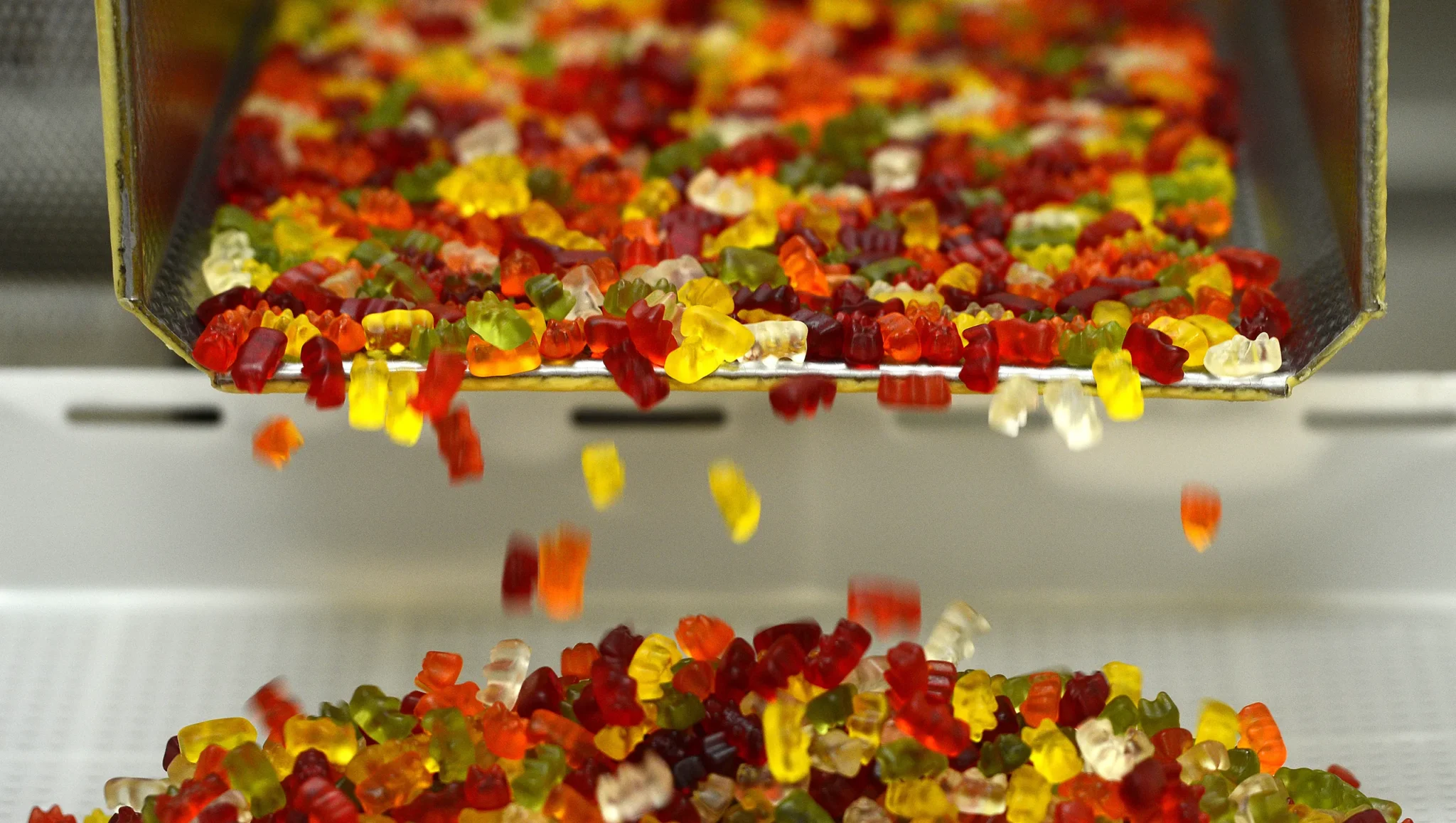
The flavoured mixture is poured into moulds that create familiar shapes such as bottles, rings, bears and fruit pieces.
Afterwards, the sweets are left to cool and set. Once they reach the correct texture, they can be removed from the moulds and prepared for finishing.
Some jelly sweets receive an additional coating before packaging.
For instance, fizzy sweets may be coated with a sour sugar mixture. Meanwhile, other products may remain smooth and glossy.
Therefore, the finishing stage helps create different textures and flavour experiences across the range.
Before packaging, the sweets are checked for quality, appearance and consistency.
These checks help confirm that the products meet the required standards. Consequently, unsuitable sweets can be identified before the final packing stage.
Finally, the completed sweets are weighed and packed into the relevant product format.
Sweetzone offers jelly confectionery in several formats, including large sweet tubs, mini bags, mini tubs and bulk 1kg jellies.
Understanding how jelly sweets are made gives customers a better look at the care involved in each stage of production.
For a visual example of confectionery manufacturing, watch this jelly sweet production video on YouTube.
You can also explore more product news and Sweetzone updates on our Sweetzone blog.